

When Art Becomes Identity of a Luxury Development
A case study in the integration of contemporary art, visual identity, architecture and luxury property
Luxury property has traditionally been defined through architecture, location, materials, interiors and amenities.
At the highest end of the market, however, another question becomes increasingly important:
What makes one exceptional property distinctive from another?
A development can have extraordinary architecture, marble, stone, brass, bespoke furniture and spectacular views, yet still feel visually interchangeable with other luxury properties.
The challenge is no longer simply to create something beautiful.
It is to create something recognisable, coherent and memorable.
This is where I believe contemporary art can play a considerably more sophisticated role.
Rather than treating art as something selected after the architecture and interiors have been completed, it can become part of the creative thinking from the beginning, contributing to the atmosphere, visual language and identity of the property itself.
The artwork does not simply occupy the space.
The space begins to speak the language of the artwork.

The inspiration: The Building’s Spinal Cord
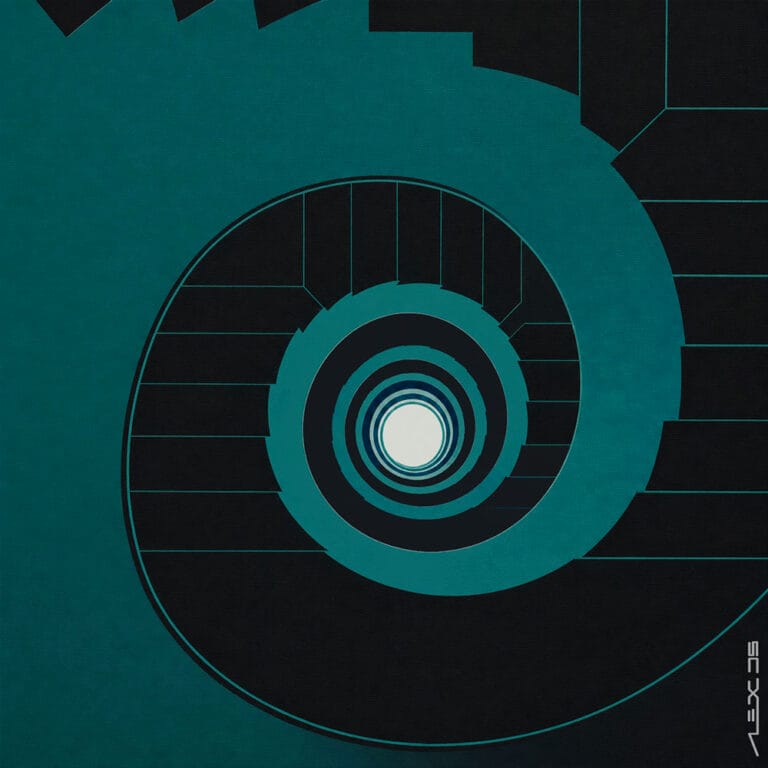
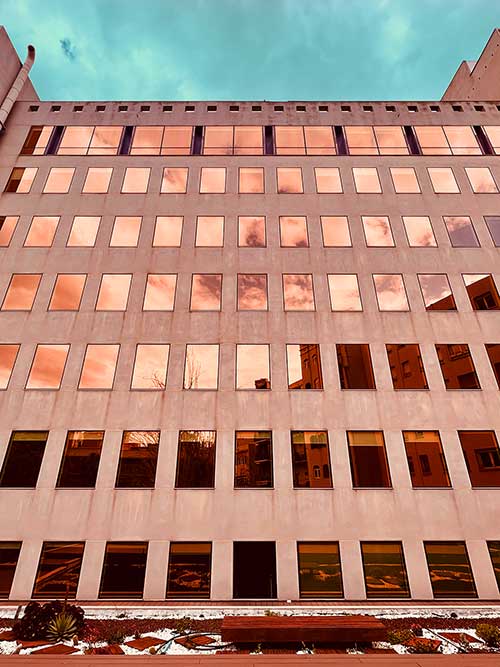
The entire creative concept originated from a detail I personally discovered while visiting the property: its staircase.
Running through the building like a spinal cord, it was more than a functional circulation element, it was the architectural feature that connected the different levels, spaces and experiences of the property. I immediately recognised its potential as the conceptual foundation for the entire brand.
That observation became the starting point for a complete creative package: property brand, visual identity, art direction and bespoke artwork. The geometry, rhythm and presence of the staircase informed the visual language, while the artistic layer extended the same idea into the interiors and the property’s wider identity. Rather than imposing an unrelated aesthetic onto the development, the creative direction was derived from something organically offered by the architecture..
This is where my combined experience as a visual artist, identity designer and creative director becomes particularly valuable:
I look for the distinctive idea already embedded within a property and transform it into a coherent, recognisable and commercially powerful brand world.
From Artwork to Integrated Spatial Identity
The Spiral is a case study exploring this approach.
The work is built around a highly reduced visual language: deep black, intense teal, concentric geometry and a luminous central focal point.
Independently, it functions as a contemporary artwork.
Within a luxury architectural environment, however, its potential becomes considerably broader.
In the proposed setting, The Spiral occupies the principal wall behind a sculptural reception desk. The circular movement of the artwork creates a deliberate counterpoint to the horizontal architectural form below it. Integrated illumination extends the visual presence of the composition into the surrounding environment.
The artwork, architecture, furniture, lighting and typography consequently begin to operate as one visual statement.
This is the distinction I make between art placement and art integration:
Art placement asks where an artwork should be installed.
Art integration asks what role the artwork can play within the identity and experience of the space.
For luxury property, the second question is considerably a larger opportunity.
The advantage of thinking like both an artist and a brand designer: why my creative background changes the proposition
I am a contemporary visual and portrait artist, but my professional background also encompasses brand design, visual & communication, interior design & creative direction.
This distinction is fundamental to the way I approach commercial art.
An artist naturally thinks about composition, colour, material, scale, emotion and visual impact.
A brand designer thinks about recognition, positioning, consistency, hierarchy and visual language.
A creative director thinks about the relationship between multiple creative disciplines and how they combine to communicate one idea.
A spatially minded designer considers architecture, interiors, lighting, materials, circulation and the experience of inhabiting a space.
I bring these perspectives into the same creative process.
That means I do not have to view a property solely from the perspective of the artwork.
I can consider:
What should the artwork be?
Where should it exist?
What should surround it?
How should the environment respond to it?
What visual language could emerge from it?
How could that language become part of the property’s identity?
And ultimately:
How can the property become recognisable because of its own artistic language?
This is the commercial proposition I believe distinguishes my work.
The property itself becomes the canvas
The most successful luxury developments increasingly operate as brands rather than simply buildings. Their architecture, interiors, amenities, hospitality, communications and customer experience are carefully coordinated to create a particular perception.
Major developers are already demonstrating this movement towards branded and experiential property. Binghatti, for example, has developed projects associated with internationally recognised luxury names including Bugatti, Jacob & Co and Mercedes-Benz, demonstrating how property can intersect with established cultural and luxury identities. DAMAC has similarly incorporated art, fashion and design into several of its developments.
The important lesson is not that every development needs a famous external brand attached to it. The more interesting question is whether a development can develop its own distinctive creative language.
This is precisely where an artist with a background in visual identity and creative direction can contribute something different.
A signature artwork can become the starting point for a broader visual vocabulary. Its geometry, colour relationships, proportions or conceptual language can inform elements of the interior. Lighting can reinforce its visual rhythm. Architectural details can echo its forms. Signage, digital communication or sales environments can potentially carry aspects of the same language.
The artwork therefore ceases to be an isolated object..
Visual Signature
This is the thinking behind the spatial presentation of The Spiral.
The central circular structure is deliberately strong enough to command attention from a distance, while the restricted colour palette allows it to sit comfortably within a sophisticated architectural environment. The reception desk does not attempt to compete with the artwork; instead, it acts almost as its architectural extension.
The illuminated typography introduces another layer of identity. Rather than simply illuminating the room, the light becomes part of the visual composition, establishing a relationship between the artwork above and the architecture below.
The result is intended to demonstrate something that I consider increasingly relevant to luxury development: the most valuable artwork may not simply be the artwork that fills the largest wall, but the artwork that creates the strongest relationship with everything around it.
That relationship creates memorability.
And memorability has enormous value in property.
Designing the moment of arrival
The entrance and reception are often the first physical expression of a luxury property’s identity.
They are encountered by prospective buyers, residents, investors, guests and agents.
The objective is therefore not simply to create an expensive-looking lobby.
It is to create a recognisable experience.
Luxury materials are important, but marble, stone, brass, glass and sophisticated furniture are not inherently distinctive.
A strong artistic intervention can introduce something much harder to reproduce:
A visual signature.
It can create the focal point of the arrival sequence, establish the colour and emotional character of the environment, create a memorable photographic moment and give visitors something they immediately associate with that particular development.
The objective is simple:
not merely to make the lobby look luxurious,
but to make the lobby belong to that property.
Why this matters commercially
The value of this approach is not purely aesthetic.
A distinctive visual identity can influence how a property is perceived, photographed, communicated and remembered.
A signature artwork can become part of the visual vocabulary used in marketing.
A recognisable arrival environment can become an asset in sales and presentation.
A coherent artistic language can create continuity between the promise of the development before completion and the experience of inhabiting it afterwards.
This is why I believe the conversation about art in luxury property needs to move beyond:
“Which artwork should we put here?”
and towards:
“What artistic language should this property own?”
From sales gallery to finished development
There is also an opportunity to introduce this thinking considerably earlier in the development process.
An artist working as a creative collaborator can potentially become involved during the conceptual and branding stages rather than only after the interior has been completed. A signature artwork or visual language can then appear throughout the property journey: from the sales gallery and launch environment through marketing imagery, show apartments and public spaces, ultimately arriving at the completed development.
This creates continuity between the promise of the property and the experience of inhabiting it.
The same principle can extend beyond residential development into luxury hotels, branded residences, private members’ clubs, restaurants, corporate environments, sales centres and other high-value commercial spaces.
The scale of the commission can change. The underlying methodology remains the same.
A different kind of commercial art partner
I am not positioning myself simply as an artist supplying paintings to property developers.
Nor am I proposing to replace the architect, interior designer or specialist branding agency.
My proposition is different.
I can operate as the creative link between art, identity and space.
My background in visual identity and creative direction allows me to understand the commercial and communicative requirements of a property brand.
My contemporary art practice allows me to create the original artistic content rather than simply source it.
My design experience allows me to think beyond the canvas.
And my spatial approach allows me to consider how that visual language behaves when it enters architecture.
This combination can reduce the distance between disciplines that are often commissioned separately.
Instead of:
Brand → Architecture → Interior → Art
being treated as independent layers,
the opportunity is to create:
ONE CREATIVE NARRATIVE
in which each discipline strengthens the others.
THE REAL OPPORTUNITY
For a developer, the result does not have to be another collection of expensive artworks.
It can be something considerably more proprietary:
an original artistic identity developed specifically for the property.
A visual language that cannot simply be lifted from another development.
A signature work that can become associated with the project.
A creative concept capable of extending from the first sales presentation to the completed building.
And ultimately, a property with a stronger sense of character, recognition and cultural identity.

Art that belongs to the place
The strongest commercial art does not necessarily shout the loudest.
It creates a relationship with its environment that feels inevitable once it exists.
This is what The Spiral explores.
Its geometry speaks to architecture.
Its restricted palette establishes relationships with sophisticated materials.
Its central luminosity connects naturally with architectural lighting.
Its scale establishes a visual anchor.
And its surrounding spatial treatment allows the artwork to influence the atmosphere beyond its physical boundaries.
The work therefore demonstrates a broader proposition:
Contemporary art can become a component of property identity rather than an afterthought to property design.
And this is the territory I want to develop through collaborations with luxury property developers, architects, interior designers and hospitality brands internationally.
Not simply creating artworks for prestigious spaces.
Not simply decorating exceptional buildings.
Creating original artistic identities capable of becoming part of the spaces themselves.
Alex Di Silvestro
KEYWORDS: Luxury property developer art | Art for luxury developments | Commercial art for property developers | Luxury real estate art | Art in luxury residential developments | Art for branded residences | Luxury hotel art commissions | Contemporary art for luxury interiors | Property development art consultant | Spatial art integration | Luxury property art integration | Art Direction for Luxury developments properties

That was amazing
thank you!