Introduction: The Silence That Speaks
In a world overflowing with noise, true emotion often hides in simplicity.
Minimalist art, at first glance, seems silent — calm, restrained, even understated. But for those who take the time to look closer, it speaks volumes.
Every color, every curve, every deliberate absence of detail tells a story.
For Alex Di Silvestro, the Italian-born creator of ICONIC ART, this quiet intensity is the essence of emotion itself. His work doesn’t shout to be seen — it invites you to feel.
“Emotion doesn’t always need complexity. Sometimes, a single line says it all.”
— Alex Di Silvestro
The Language of Simplicity
Minimalist art isn’t about less expression — it’s about more intention. It communicates through reduction, distillation, and precision. Each decision — from composition to color — is deliberate.
By removing distraction, minimalism allows the viewer to experience clarity of emotion. There’s no noise, no clutter, no confusion — just the pure relationship between the artwork and the observer.
This emotional transparency is what defines Alex’s ICONIC ART:
- Clean lines instead of chaos.
- Vivid tones instead of saturation.
- Emotion through essence, not excess.
His works may appear simple, but they are charged with energy — capturing the invisible pulse of life, distilled into visual poetry.
Color as Emotion
In minimalism, color becomes the heartbeat of the canvas.
Each hue carries a psychological weight, transforming abstraction into emotion.
- Red evokes passion and vitality.
- Blue offers peace and reflection.
- Yellow radiates warmth and optimism.
- Black and white express contrast — the eternal dance between light and shadow.
Alex Di Silvestro’s approach to color is intuitive yet controlled. His compositions often rely on contrast — the balance of calm and movement — to provoke feeling. The result is art that vibrates with emotion, even in stillness.
“I use color the way musicians use sound — to create rhythm and resonance.”
— Alex Di Silvestro
The Emotional Geometry of Line and Form
Minimalist design thrives on geometry — but in the right hands, geometry becomes emotion.
Alex’s precision-based compositions transform shapes into human experiences.
A curve becomes tenderness.
A sharp edge becomes strength.
A circle becomes unity and wholeness.
Each of these forms carries a universal symbolism that transcends culture and language. It’s the reason minimalist art can move people across continents — because it speaks a language older than words.
Silence as a Creative Force
In both art and life, silence has power.
Minimalism embraces this silence — the pauses between shapes, the blank spaces that give form to what matters.
Alex refers to these blank areas as “breathing space.”
Just as music needs silence between notes, art needs stillness between strokes.
This is what gives ICONIC ART its meditative quality — an energy that feels both vibrant and tranquil.
Standing before one of his works, the viewer feels time slow down. The noise of life fades. What remains is presence — pure and unfiltered.
Why Emotion Matters in Minimalist Art
Some people mistake minimalism for emotionless design. But in reality, it’s the opposite — it’s emotion refined to its purest form.
Minimalist artists like Alex don’t hide feelings behind complexity; they reveal them through discipline. Each stroke is a choice. Each space is intentional.
Emotion doesn’t come from decoration — it comes from balance.
It’s what turns a painting from decoration into meditation.
The Human Connection in Modern Minimalism
We live in a visual age, surrounded by images designed to demand attention.
Minimalist art stands apart precisely because it doesn’t demand — it invites.
It asks the viewer to stop, observe, and connect. To feel rather than consume.
This human connection is at the core of ICONIC ART. Each piece is designed to spark emotion not through narrative, but through essence.
Collectors often describe Alex’s work as “alive yet peaceful” — an emotional paradox that makes it endlessly engaging.
From Dalí to Di Silvestro: The Evolution of Feeling
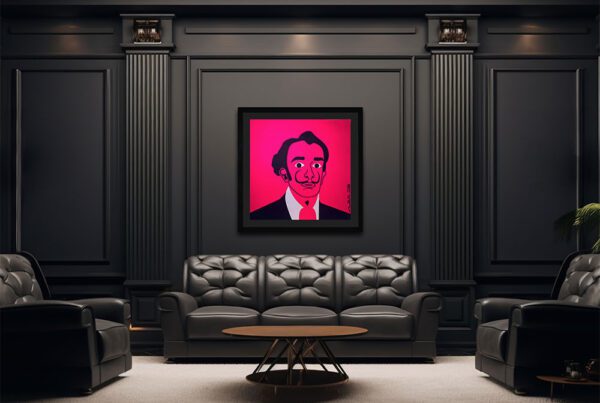
Alex’s artistic awakening began with Salvador Dalí — the master of surreal emotion. But where Dalí used fantasy to explore feeling, Alex chose minimalism.
He transformed emotion into symbolic clarity, distilling the surreal into the essential.
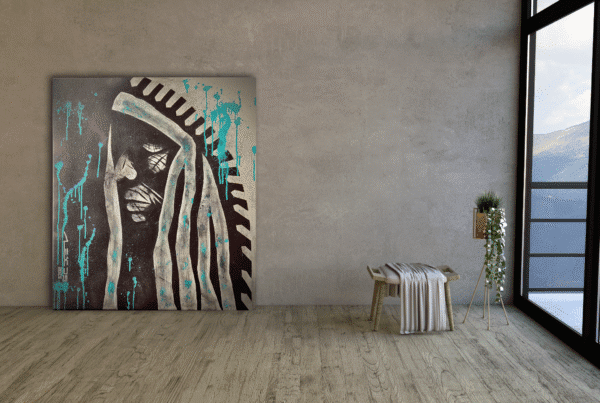
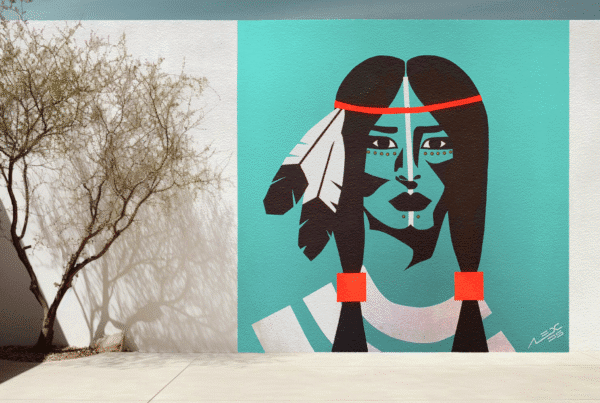
His ICONIC PORTRAITS, ICONIC HORSES, and ICONIC NATIVES all share the same DNA: bold emotion, expressed through minimal form.
It’s a continuation of a legacy — from surrealism’s dreamscapes to minimalism’s purity — bound by one shared goal: to make emotion visible.
The Collector’s Perspective: Why Emotional Art Endures
Collectors are drawn to emotion — not just beauty. A painting that moves you once may move you forever. That’s the mark of timeless art.
Minimalist pieces like Alex’s carry a rare emotional permanence.
They don’t overwhelm; they whisper. And that whisper becomes a daily companion — changing tone with the viewer’s mood, the light, and the space it inhabits.
For luxury interiors, this emotional subtlety is invaluable. It brings balance, calm, and focus — qualities every collector seeks in their environment.
“Minimalist art doesn’t fill space — it fills energy.”
— Alex Di Silvestro
The Emotional Intelligence of Creation
Every ICONIC ART piece begins with intuition. Alex paints not from sketches, but from feeling.
He lets the emotion guide his hand, then refines it with precision.
This duality — instinct and discipline — defines his art. It’s what gives each piece its resonance.
He doesn’t paint for perfection; he paints for presence.
That’s why his collectors often describe owning his work as a “dialogue” rather than possession. The art changes with you. It grows quieter, deeper, more familiar — yet never loses its pulse.
Why Minimalist Emotion Matters Today
In a society defined by excess, minimalist art offers a sanctuary of stillness.
It reflects what we crave most: clarity, honesty, and peace.
This is why modern collectors and designers are increasingly drawn to emotional minimalism — not as a trend, but as a cultural correction.
Through ICONIC ART, Alex Di Silvestro reminds us that simplicity isn’t emptiness — it’s focus. And focus, in art as in life, is the key to meaning.
Conclusion: The Sound of Stillness
Art doesn’t need to speak to be understood.
Sometimes, its silence says more than words ever could.
Through his minimalist yet emotionally rich ICONIC ART, Alex Di Silvestro gives form to feeling, inviting us to slow down and reconnect with the essence of beauty.
His work proves that emotion doesn’t need drama — it needs truth.
And in that truth, minimalism finds its greatest voice.
“Emotion is the color of the soul. I just give it shape.”
— Alex Di Silvestro
Written by:
Alex Di Silvestro Studio Team